Viser innlegg med etiketten learning process. Vis alle innlegg

fredag 16. desember 2016

GPS is a terrible teacher!

Those of us who assume that learning is a linear process, disconnected from senses, emotions and social interactions, tend to see knowledge as something that can be produced. “Industrial production of knowledge” (Robinson, 2016) is supposed to be effective and result in perfect products in shortest possible time. However, learners are usually humans, not machines.

To make it clear, I am not against machines. I use them all the time and I know that they can be helpful, but I deny being one. I am critical to the industrial production of knowledge and the illusion that learning can be “effective” with precise recipes for teaching. Neither students nor teachers should be compared to machines! Teachers have to be sensitive, attentive and flexible in order to meet each individual in specific contexts, care for them and appreciate their unique talents; Mutual trust has to be established between teachers and students, among other things because learning depends of emotions.

Thinking of analogies between learning and assembly line, and teachers as machines, makes me think about an incident where I trusted a digital device (a GPS with female voice), and when she betrayed me I learned something that makes is possible to empathize with students with bad experience from learning situations. I was on my way to Madrid airport and I followed the GPS’s instruction. The crowded, parallel and curvy lanes on the motorway kept my hands busy and my eyes focused on the road. I did not have time to look around, and I had to trust the GPS-voice. I thought I saw a sign for the airport. I was driving and driving and getting more confused with every minute. Why wasn’t I getting there? When the GPS sent me to circle around a roundabout, I knew something was wrong, but at that point, I had already lost my sense of direction and had no clue where I was. Like in step-by-step instructions (I remember a software course I once attended) I got lost if I misunderstood a tiny detail; There was no way back or possibility to find out where it went wrong. Blind following of instructions - turning off own thinking - can get one to quite unpleasant places. That is what I learned both from the from the GPS-incident, and from the software course. I learned to distrust and to get scared.
After circling around Madrid for one hour and 50 km in radius (I later found out that it was what the GPS was doing – sending me around Madrid because she did not like the address I had given her) I was desperately trying to get off the highway, but the moment I left one highway, I entered another one. There was no place to stop, no one to ask, no time to think. Caught in the traffic felt like being in a never-stopping carousel. The fear of being too late for the plane, mixed with all kinds of stress, discomfort and luck of confidence. I could not think clearly. I probably seemed quite foolish when I simply run of my car and stopped a taxi, hoping that the driver spoke English! The look on the taxi-driver’s face was unmistakably saying: “This woman is crazy”. Intelligence and madness can be quite contextual – we should be aware of that when we, teachers, stress, confuse or comfort our students.
In my view, trust and flexibility are necessary components of teaching and learning.


The GPS-incident has been haunting me for years. You might find my associations with teaching strange, but the emotional side of the experience has been so strong that it has really had impact on my understanding. Meaningfulness of what I learn comes to me when my understanding is connected to my our personal endeavors, choices and struggles – not when I am blindly following someone else’s instructions. Learning is a process of personal engagement!


We humans (teachers and learners alike) are sometimes slow, confused, scared and we sometimes act unreasonably, even stupid. We might not always be accountable, as we expect machines to be, but we are capable of contextual choices, improvisation and construction of meaning in the contexts where we are fully alive.


Robinson, K. (2016). Creative Schools: The Grassroots Revolution That is Transforming Education. New York: Penguin Books.

lørdag 6. august 2016

In Widerberg’s and Munch’s Footsteps

Each of us has a unique view on the reality. Each individual’s view is connected to real events, thus how the reality affects us depends on many personal factors… on our senses, attention, imagination, interests, emotions, experiences... Education usually pays more attention to facts from the “real world” than to students’ perceptions of it (Robinson, 2016); fortunately, this is not the case in arts education.

My research builds on the claim that each person makes/constructs/negotiates personal understandings on the behalf of embodied experiences from past and present. Motivation for learning, creating or exploring, can come from experiencing some kind of similarity between a past and a present experience. Here are examples where famous paintings matched students’ personal experiences; in the first example the students were young pre-school children age 3-5; the second example is from early childhood teacher education.

In a research project, few years ago, I accompanied a group of children to a beach. The children played in the fine sand and shallow water.  Some of the teachers took pictures and I later selected photos to show to the children later in order to help them recall their experiences. The plan was to motivate the children to paint. For that purpose examples from a Norwegian painter Frans Widerberg were to be used as inspiration, however, while I was looking through an museum catalogue for Widerberg’s exhibition the children had recently visited, I saw extraordinary resemblance between the photos and the paintings. The motives as well as compositions were identical! I was amazed! When the paintings and the photos were shown to the children one after another on a big screen, it seemed like Widerberg painted the children that day – as if he was on the beach with us (see some of the paintings here: https://www.artsy.net/show/kunstverket-galleri-frans-widerberg ). The children’s experiences of the real world merged with their art experiences. This was magic! The children could instantly sense that art can mean something to them. They experienced that art can talk directly to them and were motivated to explore their own ways of expressing through this this wordless language. Additionally, their own experiences suddenly seemed more important to themselves … since thy seemed to be important to a painter who put them on canvas in powerful colors.

In another educational setting, where I was responsible for a group of teacher students (with minimal art experience), another famous Norwegian painter Edvard Munch was to inspire the students. Actually it was another way around: the students’ own activity of drawing was to be experienced first, and Munch’s paintings were to recall their personal experiences.

We are fortunate that our campus (University College of Southeast Norway, campus Vestfold) is situated close by Åsgårdstrand, a small city where Munch used to spend his summers. His summerhouse is still there, as well is the beach visible on many of his paintings (see https://www.artsy.net/artist/edvard-munch ). The students spent a day of drawing on the beach – just like that, without any introduction to Munch, however I had first told them about the project with children and Widerberg’s painting. I wanted them to experience the place with their own senses first. The drawing assignment was a form of slowing time, allowing focused attention, dwelling and engagement of senses. Their interest for Munch paintings evolved from the fact that they literally walked in Munch’s footsteps. Their feet touched the same sandy ground… though 100 years later. The new experience – the one from art – could resonate their own multisensory embodied experiences. The past and present experiences could meet in personal, emotionally loaded insights, meaningful because they concerned them, and were not only a piece of art history to be memorized.

Munch's summer house in Åsgårdstrand

Robinson, K. (2016). Creative Schools: The Grassroots Revolution That's Transforming Education. New York: Penguin Books.

https://www.artsy.net/artist/edvard-munch     
https://www.artsy.net/show/kunstverket-galleri-frans-widerberg

torsdag 19. mai 2016

Teaching and Trust

Can teaching ever be neutral and objective? I don't thinks so. The way you look at your students, the way you make them feel - everything matters for their personal growth and emerging understanding. My colleagues Anne Lise Nordbø and Fatima Cruz and I studied our own teaching in a project where we asked our students (early childhood teacher education) to improvise in performative events with 0-2 year old children. We learned that trust was essential for our students' abilities to develope their improvisational skills. We tecahers first had to earn the students' trust, before they were able to embrase the challenges we exposed them to.


Our article "Trust me, you will learn something! - Challenge and confidence in teaching improvisation" is now published in the book "Education as Jazz: Interdisciplinary Sketches on a New Metaphor", edited by Marina Santi and Eleonora Zorzi.
http://www.cambridgescholars.com/education-as-jazz

lørdag 20. februar 2016

What could a Serbian donkey teach Norwegian students?


Students of teacher education at University College of Southeast Norway were exposed to an extraordinary challenge when they were asked to help a donkey with her health troubles. Maza-donkey had traveled far away from home in Serbia, over seven mountains and seven seas, to a place in Norway where grass was greener… dangerously greener. The change of climate and food did not do her well, she got laminitis (horse disease caused by too much sugar and proteins in food) and she desperately needed help to keep her dissolving hooves dry during the long Norwegian winter.

The fall after Maza got sick I was responsible for visual art teaching in a wonderful group of 17 students of teacher education. Their excitement inspired me to come up with an idea that they could design a shelter for Maza. That would be a realistic problem for them to solve – with pedagogical capacity to engage them, make them learn though experience and get inspired how they could plan their future teaching of school children.


A large cage-like construction was occasionally standing just outside the art department. It was a rest from reconstruction of the building. It needed to be removed anyway, and we saw possibilities how to transform it into a castle for Maza - who we imagined was a donkey princess. The students designed square applications in water-proof textile to fill the windows in the metal frame. Maza herself inspired the designs: some of the motives were her hairy ears, happy tail and mystical cross on her back. The students that were inspired by a story about “princess Maza” gave her diamonds and other things a princess should have in her castle. Some students made landscapes to remind her of her beloved home county. One student even made an applique of Serbian national fruit plum, unaware of the fact that Maza once upon the time actually lived in a plum garden…


Maza taught the students about empathy and designing for specific purpose and needs. She taught them about the importance of imagination in learning and teaching, and how meaningfulness comes from feeling of being of value for someone else… event if (or exactly because?) that someone else is a little helpless donkey. There is so much mastery and joy in the experience that out efforts matter to someone. 

Thanks to Henning, Terje and Thomas who helped with transporting of the “cage-construction” from University College of Southeast Norway to the stables at Holt, Stokke, and to Marianne and Roger that allowed us to place it on their property.


This story has also been edited and published at the web-page of Norwegian embassy in Serbia:   http://www.norveska.org.rs/News_and_events/News-and-events1/What-could-a-Serbian-donkey-teach-Norwegian-students/#.Vsi3RWf2bIU


søndag 10. januar 2016

A hen without head and a dragon

While I am filming my three years old niece play with playdough, she is explaining what she is doing. She presses small pieces of the material together and says that it is important to make them stick. Then she cuts playdough with a knife in many small pieces. I ask her what she is going to do with so many pieces. She says that this is the right way to do it – and her voice is very convincing.

 
At one point, she starts laughing and pointing at the lump in front of her: "Look!"
I do not understand what she is trying to show me.


She tries again: "See? The hen does not have a head!", she laughs. She is right, I can not see any head. I can not see a hen, either! - but I laugh together with her. Along with our playful laughter, I sense how she is becoming even more confident in his actions. She now turns the invisible hen around and announces with surprise in her voice: "Oh! Now it became a dragon!" The tail of the chicken without a head, became a head for a dragon. She starts taking pieces of playdough, pressing them between her thumbs and forefingers and making flat chips to shape a kind of armor for the dragon. I wonder what thas is, and she says that the dragon needs protection from rain.


I am curious about her ideas and I ask her where she had seen such a dragon: “Have you may be seen it in books, on TV, or somewhere else?”

She responds: “No! I have not seen it anywhere. I made it!”

I try again to identify the source of her inspiration: "Perhaps such dragons exist in fairy tales?"
But she is determined: "No, no! It does not exist anywhere else, but here!!!”
She is the proud creator of the unique dragon that was born from a hen with no tail – and she knows it! I could almost hear and smell her increasing self-confidence.

lørdag 10. oktober 2015

Practical Explorations of Research Methods


The new early childhood teacher education program in Norway is in its third year for the first time. New graduates, with a brand new profession name “barnehagelærer”, are expected in Spring 2016, after they pass a number of exams; Among the obligatory exams there is an bachelor-degree-assignment to be carried out for the first time as a part of the new national program. The novelty may, in fact, be more exciting for the university teachers who are teaching at the program for the first rime, than for the students (who preferably attend the program only once and have nothing to compare it with). As one of the teachers, I am curious and a bit anxious about the outcomes of the program: would the changes we have been working so hard on pay off in form of more self-confident, attentive, caring, responsible early childhood teachers in close future?

 
In their bachelor-degree-assignment students are supposed to conduct a small research project and experience a role of a researcher. They can use a wide range of methods that are applicable to problem questions of their choice, possibly including collecting data in early childhood settings. I believe that a researcher is responsible not only for the way one conducts the research and how one treats subjects in her/his research, but also responsible for the choices of problems one wishes to address. Would the young unexperienced students be modest and reflected enough to pose appropriate questions that can fit the scope of their assignments? Will they be respectful and careful enough when they meet early childhood teachers, children or parents? Will they be able to recognize the influence of their values and attitudes on their conclusions and on people they meet? If not, I dread that their projects can do more harm than positive contribution to the practice field. 

I recently had a chance to introduce research methods to a group of third year students, and since I believe that theory is often difficult to understand prior to experience, my lecture stated with a small exploratory assignment. In order to illustrate how many choices have to be taken in an research process I gave the student groups of 4-5 students different objects and questions to discuss: One group, for instance, got a pile of Lego blocks of different sizes, shapes and colors and were told to find “the average block”; another group was given three different kinds of grapes and were to decide which type tasted best; yet another group was given a shoe to analyze in order to make a story what had happened with the shoe. (The specific shoe had, in fact, received an extraordinary treatment last summer when the shoe soles fell off under the feet of an unexperienced young friend I inited to a dangerous mountain trip.) 

It was interesting and surprising to see how the students went on in solving their assignments. None of them did it the way I expected, which made it even more interesting. The group which was given a bag of strange dried fruits (something I bought on an exotic marked and had no idea what it was) was supposed to find the fruit piece that had “the best quality”. I hoped the question would intrigue them to, among other things, discuss the notion of quality and how it can be uncovered. They did do so, but the definition they came up with was quite a surprise: Their definition of fruit quality did not concern the shape, size, smell, color, dryness or something that could be of importance for something eatable; they instead tested which of the fruits had the best bouncing quality. Just like that, my students’ creativity disclosed my delimiting expectations! But, of course, I though: if the fruits were considered as objects for play, one could assign new meanings to them disregarding of their original function. The student’s playful attitude made them apprize the qualities invisible for those who would focus on the objects’ original functions. Not knowing is a gift to open-mindedness.

torsdag 30. april 2015

Observations in Spain

When my students and I took a five-day trip to Spain this April, we experiences quite a lot. It was a cultural journey as well as an educational journey… educational in so many ways. We learned much about each other and learned how to attune to the group full of individual differences. We also had a chance to learn a bit about Spanish primary school education through observations of teaching. The school in Palencia that we visited focused on visual arts and integration of pupils with different disabilities, and was bi-lingual (which meant that two of the subjects were thought in English). Each of the students attended three school lessons, switching between the 2, 3, 4, 5 and 6 grades, switching classrooms, teachers, languages (English/Spanish) and subjects. Some of classes were thought by Spanish teacher students in training.


One could wonder what one can learn from observation of a lesson in a foreign language. Oh, there was so much to be seen and understood; and if not understood, at least there is so much to wonder about; We observed the physical space, how the pupils were sitting, how the teachers interacted with them, how they got their attention, the way the lesson was organized as well as the level of pupils’ engagement. The most interesting issue that we later discussed was classroom leadership and how it appeared different from class to class, from teacher to teacher, from subject to subject. Even though the school’s overall guidelines were the same, each lesson was dependent on the specific teacher’s teaching style I relation to the specific group of pupils. The teaching seemed to be contextual and relational, and also influenced by our presence: In one of the classes the teacher decided to teach Norwegian geography and our presence was a motivating the lively third-graders.  

Another issues my students found interesting was the question of how much informal chatting and noise a teacher can accept. Some of the students experienced the classes as chaotic and fell sorry for the teachers, while other students assumed that the noise was a part of the pupils’ engagement and an expression for meaningful learning. It is, of course, impossible to say who “was right” and who “was wrong” but wondering about it facilitated a basis for reflections about own teacher role and motivated the students to imagine which kinds of teachers they aim to become.

 
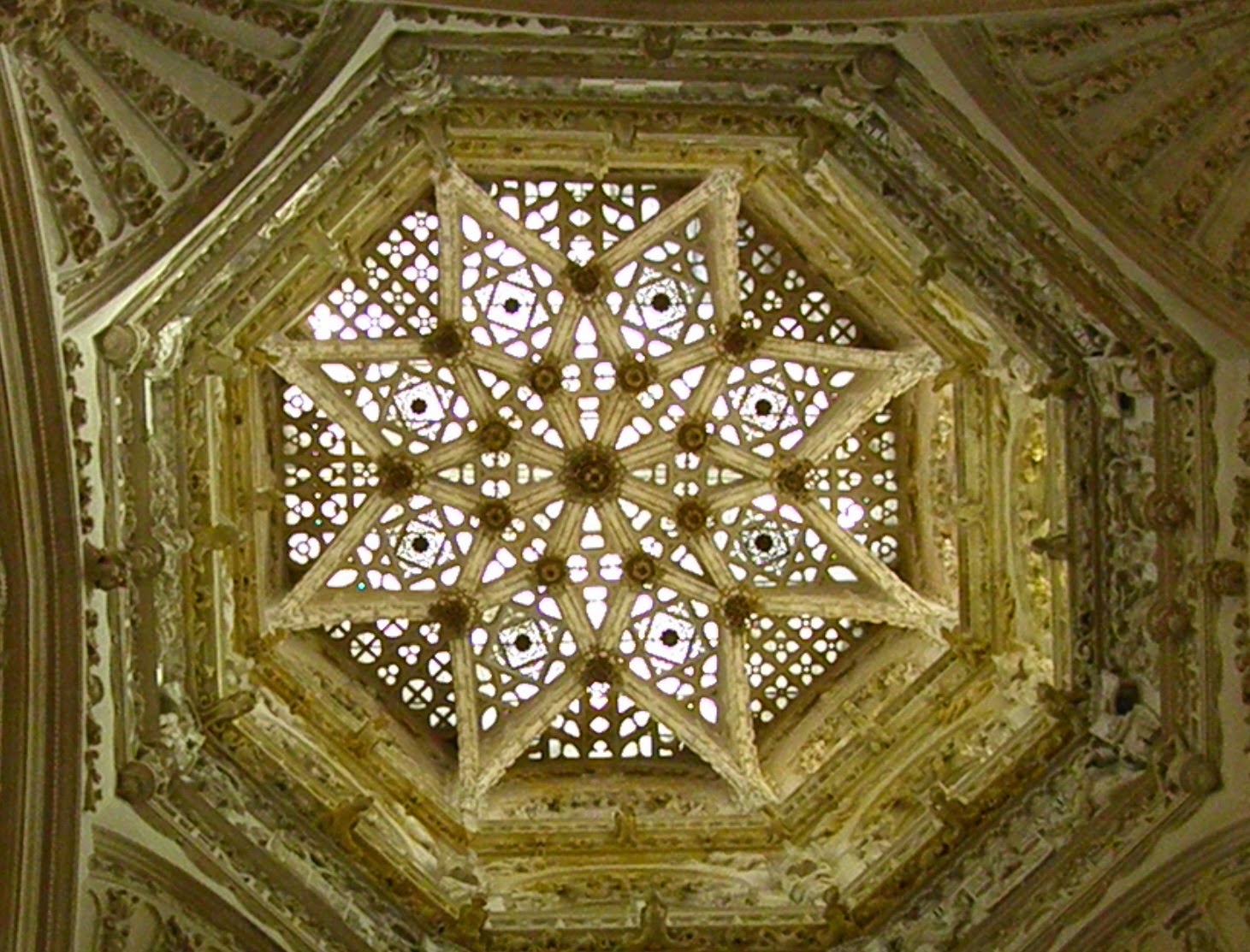
The images show some of the ceiling in Burgos cathedral. 
 

torsdag 5. juni 2014

Engagement in Teaching and Learning

For the last 10 years or so, I’ve been presenting my research on conferences in USA, France, Canada, England, Spain, Lithuania etc. but never in my birth country, Serbia. In Fall 2012 I got an e-mail from an teacher educator who occasionally found my articles on internet and realized that we had common research interests. At that point she only knew my second name (which is Norwegian) but when she found this blog she saw my first name and got excited – the name uncovered that I was Serbian. Her e-mail reached me while I was visiting my parents in Belgrade and we had a chance to connect. Nevena Hadzi Jovancic is an art professor at Teacher Education Faculty at Belgrade University. She invited me to give a talk at her faculty, which I finally did in spring 2014, more exactly April 15th.


I have to admit that I was curious how many people would show up the afternoon before Easter holiday, especially because the lecture was not required for the students, but I was positively surprised. The auditorium was fool of people, mostly students but also faculty members: teachers in mathematics, music, pedagogy and visual art. Next astonishment: No phones, no computers, nor hiding behind the screens - the student showed full attention. I could feel how this act of respect and trust that I was given strengthened my self-confidence. The expectations reflected in the faces of the audience made me even more engaged.


I told them how important eye contact end body language is for children and students of all ages - in the same time as my body verified my words. The communication was immediate and the positive energy was flowing back and forward: the audience was motivating me, so that I could motivate them back. So, when the applause broke loose, I must say that it was the audience that deserved at the least the half of the cheering. The applause sounded suspiciously similar to what you hear on rock concerts - a kind of applause a teacher only can dream of. Nevena later commented that she was afraid the students were about to light their lighters and phones to glow in the dark. And I felt like I was supposed to go back on stage and repeat one of my songs – though I did not sing that afternoon at all…


No wonder, after this experience meeting my students back in Norway was a bit disappointing. I don’t like to say this in public (though I am quite sure that these specific students will never bother to read my blog, even though I did ask them to do so). I have to make explicit that I am not saying that students in Belgrade are more engaged than students in Vestfold, but I am saying that some groups are more engaged than others; Some student groups develop to be more engaged and positive than others, and some groups unfortunately bring the worst in each other.
 
Something obviously happened during the hour “on the stage” on Belgrade university. On the other hand, some of my own students never gave me a chance to share with them my research, but with anger and disrespect stopped me before I started. After a few attempts I actually gave up. When their virtually asked “Why do we have to be here, when we would rather do something more fun? Why are you bothering us – listening and reflecting is so hard!”, I felt like drawing under a heavy wave of discouragement and disengagement. Why should I bother when they don’t? I know, I know… because I am responsible for the teaching. But I don’t believe that anyone can be thought if she/he does not want to be thought! What do you think?
  
One thing I am sure of is that teaching and learning are much more meaningful, fun and long-lasting if each student and teacher invests own share of positivity and respect, and responsibly contribute with whatever they can bring to the context. A friendly smile is a big contribution.

mandag 18. november 2013

Bodies Communicate Attitudes

I am in Urbana again, a guest of University of Illionis and a Fulbright scholar. In 2010 I spent seven weeks here and really enjoyed the possibility to be a part of the large community of researchers where is always possible to find someone who shares my ideas about the arts, teaching and qualitative research. However, on my way to Urbana I found someone with similar interests even before I had sat my foot on the American ground. On the plane from Stockholm to Chicago I found myself sitting beside one of such people I had so much in common with! Strange coincidence, isn’t it?  We did not know about each other and before we could start our five-hours-long conversation a few other coincidences had to take place: that I placed a book I hoped to read in the pocket in from of me, that this was a book Walter Gershon (that’s my new friend’s name) recognized the book (Nachmanovitch, 1990: “Free play. Improvisation in Life and Art”), and that he did not hesitate to ask: Why are you reading that book? That is how the most interesting conversation started.

We spoke about learning in arts, we found out that we knew some of the same people and that we used much of the same literature. Somehow we begun to discuss body-language – possibly I started to talk about my horse, or Walter started to talk about his classroom interactions with teacher students. It really does not matter what we started to talk about first, in my body-mind all of my experiences, professional and private, suddenly merged; I suddenly realized how my recent interest in communication between humans and horses was relevant in understanding of communication between human.


Pay attention to how the horse trainer’s leg movement is copied by the horse. (The photography is owned by Heidi Lysdahl - the horse trainer).

Walter was talking about his experience how the inner attitude, respect and determination to lead a group of students easily gets perceived by the students; I was thinking about the course in horse-human communication that my horse and I recently attended, and how the teacher at the course (slightly intimidated by my horse’s inner strength and teenager attitude) stood still before she entered the space where the horse was running freely - She said she was working on her inner strength; Horses are extremely capable of detecting such inner strength and would adjust their attitudes accordingly. When we relate this to teacher training, a teacher student might think that it would be easy just to learn how to stand and by that control a class of young students – however this is not simple at all, particularly because it is not possible to fake. You really have to mean, end fell and know who you are and what you stand for. If you want to influence your student’s attitudes, you will first have to get to know yourself and work on your own attitudes.

Today (November 18th) I am giving a lecture that touches upon a similar issue: To be good teachers we have to know our attitudes about teaching and learning. To be good teachers of young children we need to know how they learn - And this is something we can learn from them. The title for my talk is “What Can Young Children Teach Us About Learning?”


The image of me and the horse is from Meg's Riding Academy in Homer, where I've been learning western riding style.    

onsdag 16. oktober 2013

Researchers' Voices in Politics of Early Childhood Education

The 23rd EECERA (European Early Childhood Education and Care) conference was hosted by University of Tallinn in August 2013. I had never been in Estonia before and joined a sightseeing tour where I learned about Estonian’s passion for singing: They sing when they are happy; They sing when something is wrong – They even sing in revolt: it way through “Singing revolution” that when they won independence from Soviet occupation!


My imagination connects the experience from Tallinn sightseeing to my experiences from the conference; What I have on mind are the two keynote presentation which were as contrasting as the words “singing” and “revolution”; Encouraged by the historical fact that gathered voices can change a nation’s future, I was (and am) hoping that voices of qualitative researchers can influence political decisions in education. The voice of Kathy Sylva from University of Oxford discouraged and scared me. The voice of Nandita Chaudhary, from University of Delhi, gave me hope.
 
The two professors, both brilliant presenters, had quite difficult approaches to reality. Professor Sylva’s presentation “Quality in Early Childhood Education: Can it Be International?” introduced large scale quantitative studies she meant could give us general answers about the quality of early childhood worldwide. Though she did not explain what she means by “quality”, attentive listeners could sense that her quality definition was related to economy; She explained how she, long time ago, presented her research (conducted among children in one city) to UK government and was not convincing enough. So she decided to give the politicians what they wanted: she gathered with other researchers to conduct large international research project that would measure The quality in early childhood education. She now has powerful influence on the political decisions and has managed to convince governments of number of countries that early childhood education is important for a country’s future economy. She managed to influence politicians to invest more money in early childhood education, which is a good thing – but did not challenge politicians to consider that quality of a child’s life might not be possible to calculate as simple mathematical equation of what comes in and what comes out.

Professor Kathy Sylva believes that quality can be measured disregarding the local contexts. She earned policy makers trust by giving them what they wanted: large scale quantitative research results. But how can we be sure that what policy makers want is what children in future societies will need!? (Wants and needs are two different things, says  Noddings (2003)). Should understanding of quality in early childhood be restricted by politicians’ delimited imagination and will to consider that many truths can exist simultaneously?
 

Quantitative results are simpler to grasp, but reality is much more complex. When definition of quality is, by those in power, restricted to economy-related understanding, the definition itself supports their ignorance and superiority upon underprivileged, those whose voices are not strong or loud enough to promote other definitions of early childhood quality. 

Indian professor Nandita Chaudhary presented her views on early childhood quality from completely different angle than Professor Sylva. Reminding the conference participants that she comes from one of most populated countries of the world, in a gentle manner she made us (European early childhood representatives) feel ashamed of our preconceived superiority. She said something like this: “How can early childhood quality ever be universal when cultures, values and family relations are such diverse around the world?!” If we believe that the Western world possesses “the true measurement of quality” and we wish to expose the rest of the world to the same measurement, then we are taking part in yet another colonization. Professor Chaundhary’s voice was lonely and emotional, but in such powerful way expressed the necessity of considering local context in research.

Quantitative correlations can give us simple answers, but reality is not simple. To calculate what one can get for specific amount of money does not necessarily answers the question of what one needs or how the purchase will influence one’s future. Qualitative research teaches us that there are many answers to the same question and that understanding is contextual and dependent on many variables, for instance: who wants to understand. To be able to understand something better demands personal efforts, takes time and courage. Are politicians willing to do that? Are we willing… do we dare to understand more if things get more complicated when we suddenly understand how little we understood before?

Noddings, N. (2003). Happiness and education. Cambridge: Cambridge University Press.

Both images are from Tallinn, Estonia.

fredag 30. august 2013

What Can a Donkey Teach Teacher Students?

A new study year has started at Vestfold University College. I was responsible to facilitate activities for app. 100 new students in the beginning of their early childhood teacher education on Tuesday August 27th. Wishing to give them a memorable start I planned an assignment which would challenge them to solve a real problem: design an aid that can enable a dumb donkey to communicate by sound. The problem solving activity demanded collaboration with people they had just met and establishing a good learning atmosphere was one of the aims of the group work. The assignment was also meant to function as an introduction to what it can mean to be a student and invitation to use all senses, imagination and the whole body in their learning and teaching.


The main goals were:
- To become aware of that each student’s attitude, humor, imagination, curiosity, emotions, knowledge and skills count as valuable sources in a collaborative learning processes
- To experience creativity in practice and how imagination contributes to learning
- To experience that learning is an challenging process that demands attention, persistence and investment of personal efforts; that some things can only be understood thorough engagement in an activity; that emotional attachment and genuine will to solve a problem (in this case motivated by empathy for the donkey) matters in learning;

The assignment had two main parts: First the students were asked to discuss a design of an aid for the donkey and had possibility to measure or test it. One group for instance tested the donkey’s ability to band it’s neck by putting apple pieces on the it’s back. The students were to make a drawing of the aid and explain on a poster how the aid would be used.

The second part of the assignment was to make a pedagogical plan that could be used to teach the donkey to use the aid. Such plan could be based on observation of the donkey, information about donkeys on internet, students own experiences from animal training or similar. The donkey was present during the three hours the students were working on the assignment, thus some of the students were much faster in finished the assignment - they still don’t know that assignment like this could last for days or months, depending on the level of going in-depth. One of my hopes was indeed to motivate the students to engage with assignments that their teachers plan in order to facilitate their learning. If they are eager to learn, refusing an assignment only because it seems silly is not an option. However silly (or call it creative or imaginative) it can lead to insights and experiences that could not be imagined in advance. If learning leads to new insights, how can we ever know in advance what we will come to understand? But being enriched with new experiences can last forever…

The event was covered by journalists from NRK (Norwegian national TV- channel) with a radio report, internet news and regional TV program Østafjells on august 27th (please rewind to 13 minutes and 30 seconds in the show). Though they focused mostly on the funny and cute sides of the event, the publicity was good for the new preschool teacher education, for me, and of course for donkeys.

Photo: Jan Gulliksen NRK

torsdag 18. juli 2013

Imitating own Experiences

We can easily observe how young children imitate their parents and other adults. That is a natural way of learning, sometimes done intuitively, sometimes in admiration of adults’ actions (pretending to be adults), or simply because children’s experiences with close adults are the only experiences they have about people’s behaviour; In the beginning of their lives, children’s experiences from close surroundings are their only way to know the world.    

My niece Ana, now 21 months old, has a proud expression on her face when she finds a piece of paper on the floor (or something else she defines as trash) and self-initiatively throws it in the garbage can. I can imagine that she had observed similar garbage-throwing-actions done by her family members. And I know that she had also been assigned similar tasks by her father who realized her urge to pretend-play to be an adult. He would ask her to help him to through something and then applaud her. I am sure that his support motivated her initiative to gradually take action in her own hands and throw things without being asked (though she sometimes throws things that are not supposed to be thrown). Her enjoyment of mastering the garbage-throwing-skills is related to her father’s accept and support – and as a human being she strives for being accepter and loved and therefor tries to “do things right”.


I observed Ana putting bear puppets to sleep. She cuddled them carefully over their heads and said something that sounded like “sleep”. I imagined that this was how her parents treated her when she would go to sleep, and her mother later approved that they do; Ana’s own experience of being patted over her head made her believe that this is how everyone falls asleep - she does not know any other way. When she and I placed the bear puppets on the pillow, she was applying her passive experiences of being cuddled, but in this contextshe was the caretaker and the bears those who need her care.

The same gentle movement of her right hand is to be observed in the way she touches her cats and dogs. I was touched by the same tenderness of her little hand when she was cuddling a horse. The gentleness was not adjusted to the size of the horse, but was the only way of striking she knew, even though it could by the horse be perceived rather as tickling than supportive clapping.


The sum of Ana’s past experiences is the basis for her choices of actions in new situations. By time she will learn to adjust her hand movements and other actions according to the specificity of the animals, puppets, people and contexts. By time she will learn that contexts are never the same and that each specific context demands attention to itsuniqueness, and range of choices in order to meet the moment.

tirsdag 25. desember 2012

A Cat’s Ecological Perception

One day I was sitting at my kitchen table, I discovered a pair of amber-colored eyes watching me from the other side of the kitchen window.An orange cat with tiger coat and white socks was lying in the bush. To protect itself from the cold it had curled its body in a ball shape with all fur sticking out as a hedgehog which made it look even larger, and I immediately wondered how it is possible for such a tubbyto balanceon the thin branches of the bush! And why did it do so? To get away from the cold snow on the ground… or was it just curious about what I was doing on the other side of the window.  

My next thought was about the absence of the birds which usually accompanied me for my breakfast, picking sunflowers from the bird-feeder hanging outside the same kitchen window. It took me a few seconds to realize that these two things were related: The cat was there exactly because of the birds, and the birds had hopefully realized that the cat was dangerously close and had to look for breakfast some other place.
 
In his theory of ecological perception, Gibson (1979) wrote how all organisms perceive affordances of their physical environments and act accordantly. Different substances and physical contexts afford us with different possibilities: the orange cat had definitely realized the affordances of the specific physical context that was frequently visited by tasty birds. It had realized that specific thin branches could hold its weight if it spread the weight across them. It was exactly the branches which I had cut a year earlier that made it possible to stay hidden and still have enough space to jump in the direction of the bird feeder.
How smart this cat is (!), I thought – I can imagine how even smarter it could be if it was hungry. Judging from its size it seemed like it performed bird catching only for fun… and I felt guilty: It was me who placed the bird feeder outside the window in order to watch the birds; It was me who changed the affordance of the bush and by doing so made it possible for the cat to catch birds form there. It was my responsibility if any of the birds got killed…

I started to think about all of the unexpected and yet unknown consequences of human interference with nature. Our rapid change of affordances of the Earth influences the life of organisms that we share our planet with. We have power and technology to interfere with nature in diverse ways. We have to be responsible...

Gibson, J. J. (1979). The ecological approach to visual perception.Boston, Houghton Mifflin.

lørdag 6. oktober 2012

Experience of Being a Father


There is so much we can’t know before we experience it. We can read in books, people can try to explain, and we can believe that we have understood – but as long as things we hear about do not concern us - have nothing to do with our experiences, we might not feel an urge to know more about them. But when something (or someone) has become a part of our lives we suddenly have time to pay attention to details, be sincerely curious and engage emotionally… I am, kind of, trying to be general in my introduction here, but becoming a father can really not be compared to many other life experience; It concerns so many sides of being a human…This is how my brother describes his daughter. In the same time he also describes his discovery of what it means to be father:  
“Ana is an angel. I cannot believe how much a 10 months child can understand and how well she can communicate! Earlier I thought that so young children could not communicate at all, but now I see how wrong I was. She plays so well, both alone and with us, her parents, and she likes joking with us; She knows what "no" means, and shows respect to this word …not always, though. She sometimes even uses this word against us, when we do something that she does not want!
She understands that the remote control does something to TV and that a mobile telephone, for some reason unknown to her, is supposed to be held against the ear while talking in air. She can use words “mom” and “dad” and can even pronounce her own name.
 
She knows where her nose is, where her eyes are, and where "Ana's clever head" is. She can clap when she does something smart, and wave to people when they are leaving. She can crawl very fast when she wants to reach her dad’s Lego constructions, and she destroys them with laughter. She has become found of certain TV commercials and stops playing to turn to the TV when she recognizes the music. Ana is a miracle!
Signed: Her dad”

tirsdag 10. april 2012

Tree Huts and Bending Nails

One of outdoor activities that my international students have been dealing with this spring was building of tree huts. The activity was a part of subject “art and crafts” with extended focus on experiential learning (the name of the course is Outdoor education and experiential learning); The main “products” of the project were not the huts themselves, but the students’ collaborative processes including all kinds of experiences that could possibly emerge: experiences with nature, tools, creative ideas, group discussions, design challenges, materials’ qualities … as well as luck of appropriate tools, materials or trees with desirable branches.

Three groups, with seven students each, had seven days to build three huts with a selection of recycled planks. Each groups had hand tools, like hammers and saws, rope for assembling with living trees and nails for assembling dead wood. The trees were not to be hurt by nails, but there was still much work to be done with hammers, which seemed to be unfamiliar tool for some of the students. It’s not that the students had never used hemmers before, but when the hut building demanded improved speed and quality of nailing, and the nails kept banding, the activity became a group challenge - actually a challenge each of the groups reported later. In their presentation of the building process the students recalled how they tried to understand why the nails banded: Was the metal too soft or the wood too hard? Was something wrong with the hammer? Was it about how long one held the nail before releasing it? They discussed the angle of hammer and way of hitting the nails’ head. They made suggestions and tested new ways of solving this apparently simple problem. But the long, annoying nails kept banding – at least for two of groups. The third group reported no problems with the long nails, however they found the short nails to be impossible. This made the nail mystery even more mysterious…

Activity of nailing involves wood, nails, hammer, hand and whole body that have to negotiate one with another. The easiest excuse for not succeeding in nailing would be to blame the quality of nails, hammers or even the wood, but this would not help you improve. It is only through facing the challenge that you can learn something and achieve mastery. Nails can band for many reasons, but if you are determined to continue, you can try noticing and reflecting about what you do with your body: there are many possible ways of grasping a hammer, using muscles, head positioning, directing eyes, banding back, supporting a nail… You will be surprise how much embodied knowledge is demanded from such a simple activity; You will be amazed by how much knowledge is already stored in your body.

Apart from the nail-problem the groups reported many other challenges that provided them with fresh experiences. Hundreds of practical and aesthetic choices had to be negotiated between the participants and each of them had something unique to contribute with. The fact they were exposed to heavy materials, heights and risky tools, made them develop collective responsibility for each other’s safety. Knowing that the project depended on each of them seemed to make them motivated, proud and emotionally attached, and to make their experiences meaningful and memorable.

søndag 19. februar 2012

Desire for Ski Design

With a group of students who are taking a course of “Outdoor education and experiential education” (the course Vestfold University College offers in English each spring) I visited Norwegian ski museum in Morgedal in Telemark. My colleague who teaches physical education has been there before and also this time she arranged a presentation by a museum pedagogue. I had not been there before and did not know what to expect; I ended amazed by what I happened to experience.

The museum itself was interesting enough, but the museum pedagogue with her engagement and ability to connect with the group, helped us to imagine and connect with people from the past. One of such people was Sondre Norheim who considerably improved design of skis about 150 years ago.

Sondre’s family lived purely in a little cottage and did not own any land. They had to work hard in order to survive, and working and moving outdoors was not easy in winter time considering the large amounts of snow in the mountains of Telemark. Sondre wanted to move faster not only in order to fulfill his duties, but also to have fun beyond everyday occupations. He dreamt of speed, ski jumps, and easy maneuvers; He desired to draw curves in the snow while dancing across dunes. But skis of that time could not give him these pleasures.

In order to achieved what he wished for, Sondre had to redesign the skis, make them shorter, lighter, improve the lines and the way skis were attached to the foot. And in order to accomplish that, he had to understand how design qualities of these seemingly simple objects relate to different types of movements achieved through negotiations between human body, gravity and landscape; He had to understand snow and possibilities of own body, as well as to truly understand diverse qualities of wood. I assume that such kinds of understanding were not acquired by reading books, but through physical experience – “learning by doing”. Diverse qualities of natural materials (snow, wood, landscape and human body) gave him all kinds of resistances he needed in order to learn.

Referring to Dewey’s (1925) notion of “body-mind” and his intention to justify the importance of natural materials for learning (Dewey, 1956), as well as refereeing to my own experience with children and materials, I suggest:

“Natural materials offer diverse sensory experiences, multiple possibilities for exploration and transformation, motivation, ecological consciousness, and above all resistance. Through body-mind negotiation with natural materials a child [or an adult] can meet unexpected problems and experience what it is like to create unpredicted solutions” (Fredriksen, 2011 p.128).

In order to succeed, Sondre had to be engaged in negotiations between his hands, tools and wood and continuously remain aesthetically attentive to the material’s affordances and constrains. His motivation derived from his desires to dance in accordance with landscapes. However in order to succeed he also needed persistence in order to meet the challenges of not yet discovered design possibilities. Additionally, courage was needed in order to hold on his dreams even when people around thought he was crazy.

References:
Dewey, J. (1925) Experience and nature. Chicago: Open Court.
Dewey, J. (1956) The child and the curriculum. In J. Dewey (Ed.), The child and the curriculum & The school and society (pp. 31). Chicago: University of Chicago Press.
Fredriksen, B. C. (2011). Negotiating grasp: Embodied experience with three-dimensional materials and the negotiation of meaning in early childhood education. 50, The Oslo School of Architecture and Design, Oslo. (http://brage.bibsys.no/aho/handle/URN:NBN:no-bibsys_brage_25972 )

søndag 25. september 2011

Artistic Process as Pedagogical Text

The day I delivered the thesis (August 1st), I was back on the same teaching job I had before the PhD-study – however teaching is never the same. My main teaching responsibilities this fall are related to two groups of students: the one in a group of 18 undergraduate art and crafts students, the other is a group of 19 master degree students studying “pedagogical texts”. One might immediately wonder: What is a pedagogical text? Am I not an A&C teacher and how does my teaching relate to pedagogical texts? These questions are more than relevant at the point when both my students and I are searching for appropriate definitions of pedagogical text that can appropriately include arts-based approach to education.

In the broad definition of “text”, as used by the researchers at Vestfold University College, a pedagogical texts is any kind of physical object that can be used in a pedagogical purpose. This, of course, includes text books, but also art materials, costumes used in drama education, or accordion used in music education. But what about a dance floor and the classroom space – are they also “pedagogical text” - or are they rather pedagogical contexts? Could anything used by a teacher in pedagogical purpose become a pedagogical text – disregarding what the pedagogical goals are? For instance, if the purpose of education is to stimulate students’ imagination, could a fairy-tale as well as a non-figurative sculpture, become a pedagogical text?

Meeting the two groups of my students, I bring with me my experiences and unanswered questions from one group to another; The group of A&C students have been exploring three-dimensional materials and reflecting about their experiences from the creative work. Many found it difficult to assign words to their aesthetic choices and intuitive actions. To inspire their future work with research on own creative work, artist-researcher Grete Refsum was invited to present her artistic processes.

Listening to Grete Refsum I was thinking about how fantastic piece of pedagogical text her presentation was: It was a pedagogical text that seemed to have helped her structure her thoughts, past ideas, feeling and experiences in order to present them. On the other hand, her presentation was a well-functioning pedagogical text addressing the students and meeting them at the point they needed examples of well documented creative processes.

Grete presented her work with 17 pictures (part of the same art work) in chronological order: from the invitation to exhibit, exploration of the specific room shape and function, choices of the themes, materials, techniques, shapes, lines, compositions and so on. While she was talking and showing images, I got more aware of the complexity of her creative process – in fact I could identify at least four different processes that seemed to exist simultaneously, and interweave:
1. The process of studying the space, the physical contexts where her art would be exhibited; She seemed to have audience on her mind while she was planning.
2. The process of background research that supported her thematic choice of combining Western religion (Christianity) and Eastern (Kina) ideology and culture. This research would lead to her choices of symbols, materials, forms;
3. The process of exploring materials, techniques and practical possibilities of composing with the specific material combinations;
4. And the process of her traveling and collecting personal experiences one might think of as separated from her art, but in fact essential for it.

When I view Grete’s lecture as a pedagogical text, I wonder where did such pedagogical text start and end; The lecture would not be possible if she had not for years worked on her art project, if she did not experience, reflect, take choices… Additionally, the pedagogical goals developed during her and mine discussion before the lecture about what the students needed. At this point, when the students got an assignment to verbalize their experiences and seemed to struggle with it, Grete’s lecture hopefully meet them at the right moment where they had experienced some challenge, but still not become too frustrated. Grete’s lecture could possibly help them to extent the zone of their proximal development, instead of giving up. This is up to them to evaluate: What do you say, my students?

Relevant link: International Association for Research on Texbooks and Educational Media (IARTEM)

søndag 5. desember 2010

The Craft of Aircraft Construction

One day I visited my little friend (three years and two months old), he met me at the door: “I am making aircrafts for my best friend”, he said. I was curious: “Making aircrafts?!” He picked two small folded pieces of paper from the floor and showed them to me.

I noticed another “aircraft” on the floor. It looked like a folded A4 page on the right way to become a functioning aircraft that might be able to fly around the room. But when I pointed to it, the boy was serious: “That one is not good at all!” implying that the two in his hands were much better. I was wondering which kind of criteria he had for quality of his work? He obviously had an idea that was leading his creative construction. He was though, still not satisfied with the two small forms.
“They were not ready jet”, he said.
“What do you need to complete them?”
“I need tape”, he replied.

He got some tape from his mother, but the construction problem was not easy to solve - not even with the tape - or maybe it was exactly the tape that leaded to new challenges: One had to take it off from the scroll, cut a piece, prevent it from curling, take it off from fingers, and finally places it around an aircraft. Quite complicated task for a three year old – but it is exactly the resistance in the material that made him try out, repeat, explore other possibilities - and learn. Without resistance from our environment we would not get to know about it, nor about ourselves, as Dewey (1934/29005) wrote.

The boy kept trying. His endurance seemed to come from missing and love for his friend who has been away from the preschool for days. The aircrafts were to become welcome-back-presents for his best friend. The boy had probably learned that you can make something for those you love. And here he was, expressing his feelings through creative work. His motivation to fight the sticky tape toward his goal, seem to have derived from his feelings, and his judgement of quality derived possibly from his empathy (Which kind of aircrafts would my friend like?).

Dewey, J. ([1934] 2005), Art as Experience, New York: Berkley Publishing Group.

søndag 7. november 2010

Just how much resistance do we need?

Writing and reflecting about my study of children’s interplay with 3D materials, I get more and more astonished how important experiencing resistance seems to be for learning. We have all experienced (and learned) that some kinds of resistance are important in order to learn, get self-confidence, strength and motivation. But pushing someone too far beyond hers/his “Zone of proximal development” can in many ways be damaging. How can we know where someone’s Zone begins, and where it ends?
Without connection to my study, my son and I decided to get a budgie. When we went to a pet-shop we were told to keep only one bird if we wanted it to care about people and eventually learn to talk. So we bought only one. But we also bought a book that said something like: Never keep a budgie alone. Another bird is as important to it as the air it breaths (Birmelin). “Who should we trust, the book or the shop assistant” my son (12) asked? How would we know who was right? We had to get our own experience.

The little, green bird was very tame and quite. We let him fly around and gave him a variety of food. But he looked sad... My son and I discussed what we should do: Was it more important for us that he one day learned to speak, or that he was happy? How miserable did we have to make his life in order to get little amusement for ourselves? Just how far were we willing to push, press and stretch his Zone of proximal development? (Sorry for my stretching of Vygotsky’s term in applying it to the non-human world.)
The bird kept sitting on the same branch and did not eat. Was our amusement so important that we would let the bird pay with his life? “It was not!” – we agreed and bought our budgie a nice young friend. They might thank us for that in their bird-language, but who knows, one day they might still speak in duet in human language -?

Birmelin, Immanuel: Undulater, Cappelens kjæledyrbøker

onsdag 29. september 2010

The Research Days


”Forskningsdagene” (the Research Days) is an annual arrangement at Norwegian universities and university collages – it is a festival that celebrate research. During the 5-6 days open presentations are held for students, employees, practitioners, and everybody who is interested to hear about (and experience) different research projects. This year’s theme was “Veien til viten” (“The way toward knowing”), which was appropriate for presentations of different research inquiries, as well as projects about educational.

At the Vestfold University College, September 28-th 2011 was dedicated to research in arts – more precisely, to research on “aesthetic learning process”. Judging by the number of books recently published, this concept seems to be emerging in Scandinavia, but it is still new and interpreted in different ways. My short interpretation is that “aesthetic learning process” is the process of meaning making that takes place when embodied forms of learning are appreciated.

The projects presented on September 28-th were about music making and performing, theatre for those who have just learned to walk (1-2 years old), relations between different modalities in art, creating links between traditional techniques and new contexts, knitting design, search for a fiddler’s music lost in time, testing own taste, students’ explorative design with spoons ...

I also had a chance to present my project, focusing on similarities between my own, and young children’s way toward knowing; When I was studying with 3-5 years old, their engagement with 3-D materials was as important for their learning as my engagement with them was for mine. Answering the question about ways toward knowing, I suggested that our knowledge streams through our nerve-, muscle- and blood- systems and integrates our embodied experience, mind and feelings.

All presented and exhibited project are a part of a larger umbrella project called “PES”. The “PES” gathers colleagues that teach and research in different disciplines at out teacher-education programs, and focuses on practice- , aesthetic-, and design-based approach to learning. The same interdisciplinary milieu is arranging a Scandinavian conference about “Aesthetic Learning Process” in May 2011. Welcome to send your paper proposals! http://www.hive.no/laereprosesser-konferanse/

The images:
Pål Runsjø plays inside an art instalation;
Pål Runsjø, Olav Ness, Stein Storsve, Geir Salvesen and Knut Høydal play music written by Jacob Olsen